29 Years of African Tech: What We Learnt at Africa Tech Festival 2026
Three days of conversations, fresh perspectives and new opportunities at Africa Tech Festival 2026. From AI and cybersecurity to telecommunications, infrastructure and customer experience, we explore the ideas shaping Africa's digital future and what we took away from connecting with businesses and technology leaders across the industry.

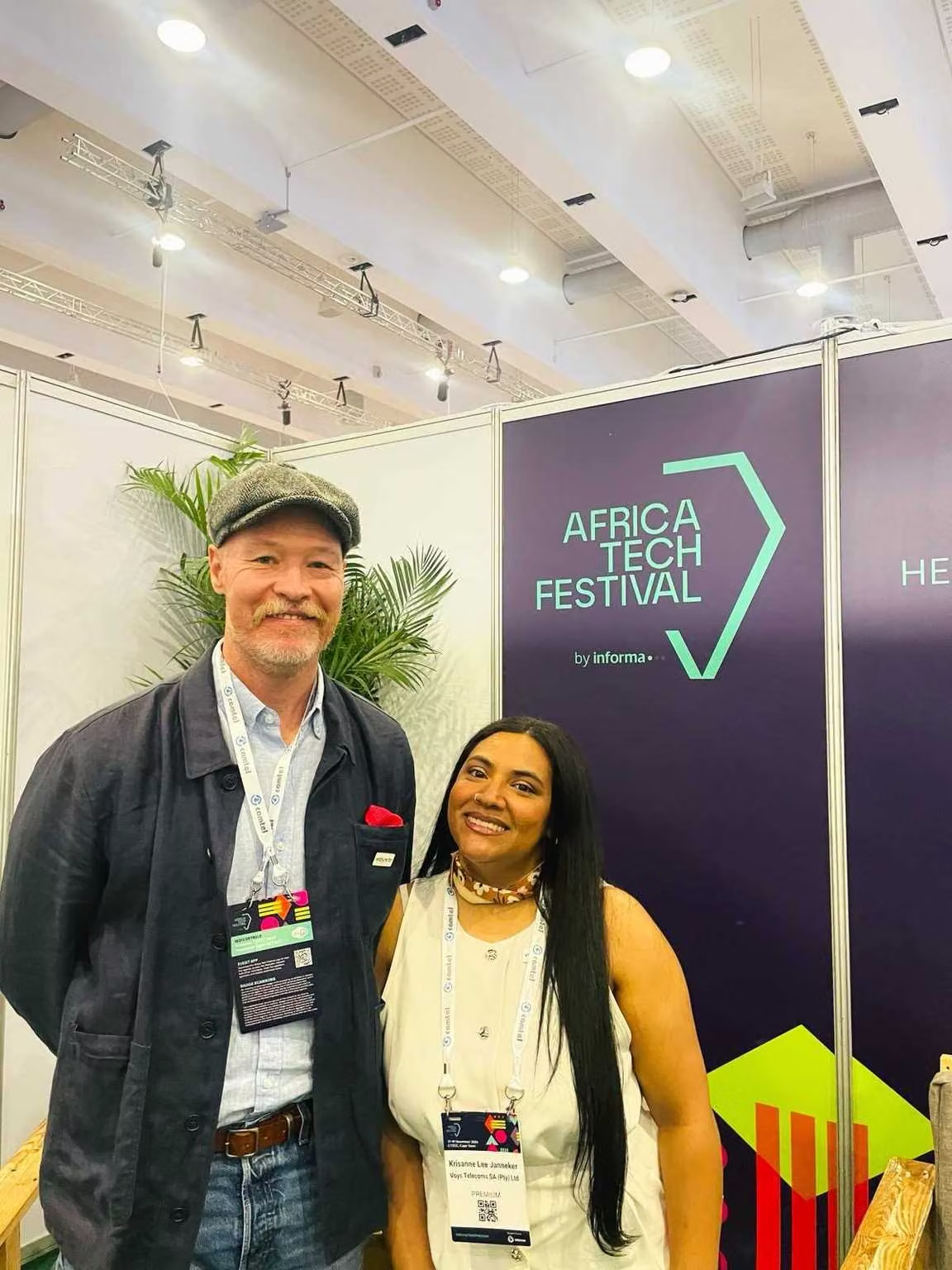
Every year, Africa Tech Festival brings together people, businesses and innovators who are shaping the future of technology across the continent. And every year, the conversations seem to get bigger, the ideas more ambitious and the opportunities more interesting.
2026 marked the festival’s 29th year, taking place in Cape Town from 17–19 November. Bigger and better than ever, it brought together businesses, technology leaders, entrepreneurs and innovators to explore the developments shaping Africa’s digital future.
This year, we attended in our Proffesional Capacities: Val Reeves – Marketing and Krisanne Jannneker, CX and Circle Lead for South Africa. We came from different professional perspectives, but with a shared interest in understanding where technology is heading, what businesses are experiencing and what the future holds for South Africa and the wider African market.
For us, attending an event like this isn’t simply about seeing the latest technology or following industry trends. It’s about listening, asking questions, exchanging ideas and coming away with a better understanding of the challenges and opportunities facing businesses.
From artificial intelligence and cybersecurity to infrastructure, customer experience and international expansion, there was plenty to think about.
So, what did we take away from this year’s festival?
1. Technology is moving forward, but the fundamentals still matter
There was no shortage of conversations about new technologies, AI and the next wave of digital innovation. But one thing remains clear: businesses still need the fundamentals to work.
Reliable connectivity, good infrastructure, dependable systems and effective communication remain essential. You can introduce the latest technology into a business, but if the foundations aren’t there, getting real value from it becomes much harder.
Our takeaway is that innovation shouldn’t always mean adding something new. Sometimes the biggest improvements come from getting the basics right, making existing processes work better and removing unnecessary complexity.
2. AI is changing the conversation, but implementation is what counts
AI was one of the major themes throughout the festival, and it’s clear that businesses are moving beyond simply exploring what AI can do.
The conversation is increasingly about practical application.
How can businesses use AI to improve productivity? Where can it save time? How can it improve customer experiences, support employees and create more efficient ways of working?
But there’s an important distinction between adopting technology and getting genuine value from it.
Our takeaway is that businesses need to approach AI with a clear purpose. The technology is exciting, but the real opportunity lies in understanding where it solves an actual problem.
And importantly, technology should support people, not remove the value of human interaction.
3. Cybersecurity and trust need to go hand in hand with innovation
As businesses become increasingly connected, the importance of cybersecurity continues to grow.
Digital transformation creates opportunities, but it also brings new responsibilities. Businesses need to think about the security of their systems, the information they handle and the trust their customers place in them.
This is particularly important as more services move into the cloud and AI becomes part of everyday business operations.
Our takeaway is that security cannot be an afterthought. It needs to be part of the conversation from the beginning, alongside decisions about technology, infrastructure and business growth.
4. Africa’s technology story is about more than catching up
One of the things that stood out to us was the breadth of conversations taking place around Africa’s digital future.
The continent has its own challenges, opportunities and market conditions. While international technology trends are important, the solutions that work in African markets need to take local realities into account.
There is an opportunity for African businesses, entrepreneurs and technology leaders to do more than adopt what is happening elsewhere. They can develop solutions, build businesses and contribute to shaping the direction of the global technology landscape.
Our takeaway is that Africa’s technology story should be viewed through the lens of opportunity, innovation and participation, rather than simply measuring how quickly the continent can follow global trends.
5. Customer experience remains at the centre of business transformation
With so much attention on technology, it’s easy to focus on the systems, platforms and tools themselves. But ultimately, businesses exist to serve people.
Whether it’s how a customer contacts a business, how quickly they receive assistance or how easily they can access a service, the experience matters.
Technology should make those interactions easier, more consistent and more meaningful.
This is particularly relevant as businesses introduce automation and AI into their customer journeys. Efficiency is important, but it shouldn’t come at the expense of a good customer experience.
Our takeaway is that successful digital transformation needs to consider both sides of the equation: better technology and better experiences for the people using it.
6. Learning from businesses across different industries
Some of the most valuable parts of Africa Tech Festival happened away from the conference stages. We had the opportunity to meet with several businesses, exchange ideas and discuss some of the challenges organisations are facing as they grow and adopt new technologies.
A few conversations particularly stood out.
Clicks Group: Understanding customer experience and business operations

One of our interesting conversations was with Albert Kanku from the Clicks Group.
We exchanged perspectives on customer experience (CX), business operations and the importance of continuously evaluating how organisations work.
We discussed where businesses might be experiencing gaps, what could be improved and how different approaches to operations could create better outcomes for both customers and employees.
What stood out was the value of looking beyond the technology itself. Sometimes the biggest opportunities for improvement aren’t necessarily found in new systems, but in understanding existing processes, identifying friction points and being willing to challenge how things have always been done.
It’s a reminder that customer experience and operational efficiency are closely connected. Improving one often means taking a closer look at the other.
C3NTRO Telecom: Exploring opportunities in the African market
We also had a great conversation with Gianleone from C3NTRO Telecom, an international telecommunications company based in Mexico.
C3NTRO has an established international telecommunications operation, providing voice, messaging and data services across different markets. Its interest in exploring the African market opened up an interesting discussion about the opportunities and challenges of expanding into a new region.
One of the biggest considerations was the complexity of entering African telecommunications markets, particularly around local legislation, regulatory requirements, numbering and establishing the right relationships with local operators.
It’s an interesting perspective because Africa presents enormous opportunities for international technology and telecommunications businesses, but entering the market isn’t necessarily straightforward.
Different countries have different regulatory environments, requirements and commercial structures. What works in one market doesn’t automatically translate into another.
Our conversation reinforced just how important local knowledge, partnerships and an understanding of the regulatory landscape are when considering international expansion.
Speedflow: A conversation about telecom infrastructure and technology
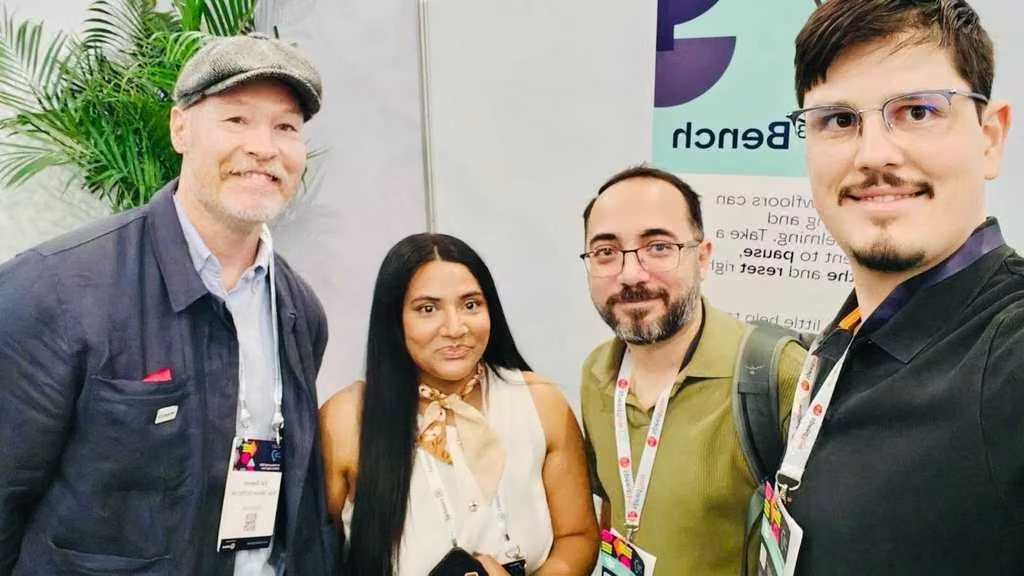
Another worthwhile meeting was with Max from Speedflow, a UK-based telecommunications technology business with an international presence, including operations in Europe.
Speedflow has been operating in the telecoms industry since 2004 and has developed its own software and infrastructure solutions for telecommunications providers, including voice switching, messaging and billing platforms.
This was particularly relevant to some of the wider conversations taking place throughout the festival around infrastructure ownership, operational control and reliability.
There is a growing need for telecommunications businesses to understand not just the services they offer, but also the underlying technology that makes those services possible.
Speaking with businesses operating in different parts of the telecoms ecosystem gave us another perspective on how important infrastructure, scalability and the ability to manage operations effectively have become.
These conversations also highlighted that there isn’t one universal approach. Every business needs to understand its own operational requirements, its dependencies and where it needs greater control.
7. Ownership, infrastructure and the importance of being in control
Perhaps one of the most interesting themes that kept coming up throughout the festival was the importance of businesses developing and maintaining greater ownership of their own technology structures.
This became an especially relevant conversation following the Microsoft outage, which was a recurring talking point during the event.
The disruption highlighted just how dependent many organisations have become on external platforms, software and services.
It raised an important question: how much control do businesses really have over the technology they depend on every day?
There is a growing argument for businesses to take greater ownership of their core infrastructure, systems and operational environments. Having more control over essential technology can offer greater flexibility, visibility and the ability to respond when something goes wrong.
Of course, building and maintaining your own infrastructure isn’t without its challenges. It requires investment, technical expertise, ongoing maintenance and the right people to manage it.
But the alternative also comes with risks.
The more businesses rely on external software, third-party integrations, plugins and suppliers, the more their operations can be affected by issues outside their control.
This doesn’t mean external suppliers are a bad thing. In fact, partnerships and specialised technology providers are essential to modern business. But it does mean businesses need to understand their dependencies and have contingency plans in place.
One lesson that stood out for us was this:
You are only as reliable as the critical suppliers and systems your business depends on.
It is something worth thinking about, particularly for businesses providing services where uptime, availability and customer communication are essential.
The conversation isn’t necessarily about owning everything. It’s about knowing what you need to own, what you can outsource, where your vulnerabilities are and what happens when a supplier experiences a disruption.
Ultimately, resilience needs to be designed into the way businesses operate, not considered only when something breaks.
8. Collaboration and different perspectives drive better thinking
One of the biggest benefits of attending events like Africa Tech Festival is the opportunity to step outside your immediate industry.
Meeting people from different sectors, different countries and different areas of technology gives you the chance to challenge your own thinking.
Our conversations with Clicks Group, C3NTRO Telecom and Speedflow were good examples of this. Each business operates in a different environment, faces different challenges and approaches technology from a different perspective.
Yet there were common themes running through all these conversations: operational efficiency, customer experience, infrastructure, reliability and the importance of adapting to change.
Sometimes the most valuable insights come from people who aren’t working in your industry at all.
Our takeaway is that collaboration and knowledge-sharing are important parts of progress. No single business or industry has all the answers, and there is a lot to gain from connecting with people who approach similar problems from different angles.
Looking ahead: What are we taking back with us?
After three days of conversations, ideas and new perspectives, we left Africa Tech Festival feeling that there is plenty to be excited about in the African technology landscape.
From AI and cybersecurity to connectivity, customer experience, infrastructure and digital transformation, the themes are interconnected.
Progress in one area creates opportunities in another, and businesses need to consider the bigger picture rather than looking at technologies in isolation.
For us, the value of attending was the opportunity to step outside our everyday environments, listen to what is happening across the industry and reflect on how these developments influence the way we think about business, people and technology.
One thing became particularly clear: innovation is important, but so are the foundations that support it. Businesses need reliable systems, good people, strong partnerships and the willingness to question how things are done.
Twenty-nine years on, Africa Tech Festival continues to bring the industry together, and it’s encouraging to see how the conversations continue to evolve.
Our biggest lesson?
Keep asking questions, keep learning, take ownership of what matters and never assume that the way things work today is the way they’ll work tomorrow.
We’re already looking forward to seeing what the next chapter of African technology brings.
Learn more about South Africas Favourite Telecoms Company
From VoIP to pushing boundaries across the telecoms industry, Voys is making a difference in more ways than one. As a self-managing organisation, we believe in taking initiative, working together as equals, challenging convention and making telecoms great again.
Discover the many ways we’re making it happen below.
Voys South Africa